
Begin with a candidate rule#
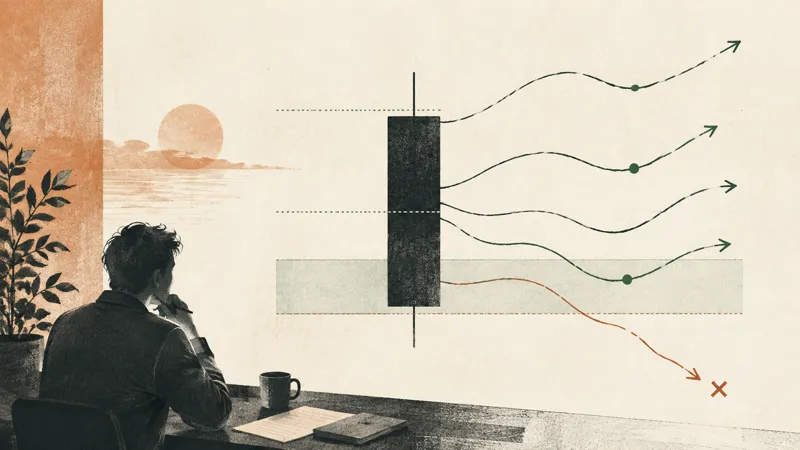
“The last down candle before a bullish move” is not precise enough for a backtest. Which bullish move? How large? Must it break structure? Does the candle's body or full range define the zone?
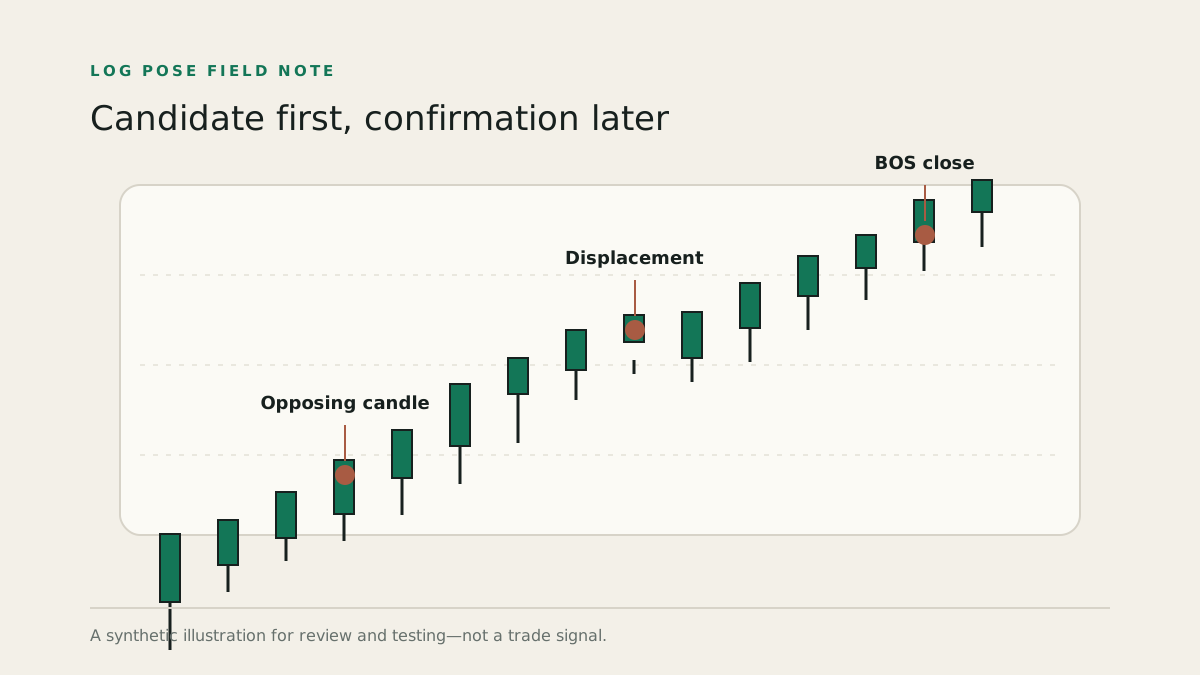
Log Pose uses a bounded candidate definition: after a qualifying displacement produces a confirmed break of structure, look backward for the last opposite-colored candle associated with that move. The displacement candle must meet fixed ATR, body, and closing-location tests. The structure break must close beyond a confirmed swing by a buffer.
That is one operational definition. It does not claim to settle every discretionary ICT interpretation. It creates a repeatable sample that can be challenged.
Keep event time and confirmation time separate#
The candle selected as the order-block candidate occurs before the break. The candidate is not confirmed on that earlier candle. It becomes known only after the displacement and structure-break conditions close.
A backtest that draws the zone backward and enters on the candidate candle has looked ahead. The earliest eligible order is after the confirmation timestamp.
This distinction also affects chart review. A trader may have anticipated the zone live, but that anticipatory rule must be tested separately. Do not use a later BOS to certify an earlier discretionary entry under the confirmed setup label.
Define the zone#
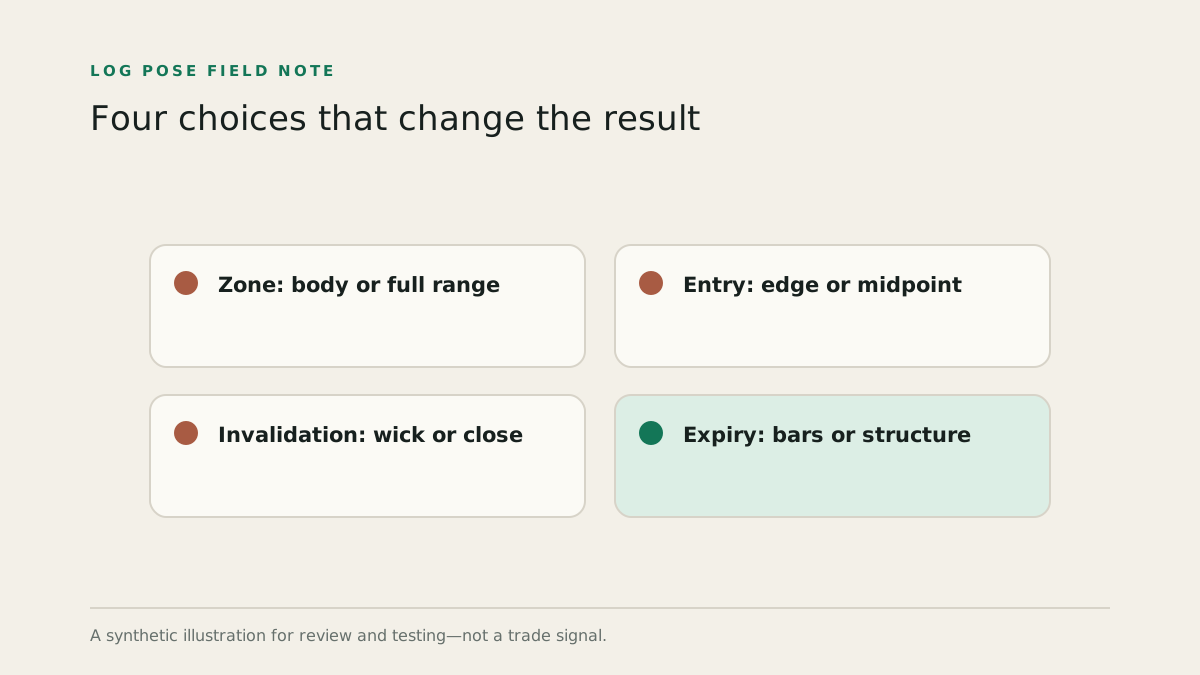
Common choices include:
- full candle range, high to low;
- candle body, open to close;
- open price only;
- 50% of the candle range;
- a refined lower-timeframe segment.
Each creates different fill frequency and risk. Freeze one primary definition. If you compare alternatives, run them as separate variants on the same candidate set.
Refinement can introduce selection bias. If you choose a smaller zone only on successful examples, the refined backtest is not reproducible. State the lower-timeframe rule before revealing what happened next.
Define entry, invalidation, and expiry#
An entry rule needs an order type and a clock. For example:
After confirmation, place a limit at the proximal edge of the full-range zone. Cancel after 20 five-minute bars or on a close through the distal edge, whichever occurs first.
Then specify the stop. It might sit one tick beyond the distal edge, beyond a sweep extreme, or beyond a separate swing. Include the spread and slippage model.
When an OHLC bar contains both the entry and stop, sequence is ambiguous. Use lower-resolution evidence only if it was available consistently across the sample. Otherwise choose a conservative assumption or exclude the bar with a recorded reason.
Do not let displacement mean “a candle that worked”#
Large-looking candles vary by symbol and volatility. A fixed dollar threshold selects differently across regimes. Normalize the move.
The Log Pose displacement test requires:
- true range at least
1.5 × ATR(14); - body at least 60% of the candle's range;
- close within the outer 20% in the direction of travel.
These thresholds reject wide doji-like bars and large candles that close back near the middle. Test sensitivity around the threshold. If performance exists only at exactly 1.50 ATR and disappears at 1.45 or 1.55, the apparent edge may be overfit.
Build a useful control group#
Save at least three nearby samples:
- opposing candles followed by displacement but no confirmed BOS;
- confirmed BOS without qualifying displacement;
- qualifying candidates that never retrace to the zone.
The control groups tell you whether the full sequence adds information or whether any recent opposing candle would have produced a similar result.
Keep unfilled zones in the candidate report. Removing them exaggerates how often the setup offers an executable entry.
Audit twenty examples by hand#
Before running thousands of bars, inspect twenty candidates:
- Can two reviewers select the same candle from the written rule?
- Is the swing confirmed before the BOS?
- Is the buffer calculated from information available then?
- Does the order begin after confirmation?
- Does the invalidation precede the fill in any case?
- Are split dates or missing bars present?
If the hand audit fails, more data only scales the classification error.
The goal is not to prove order blocks “work.” It is to discover how a specific, timestamp-safe definition behaved under stated execution assumptions.
Sources and methodology#
Product details and workflows can change. Links below are the primary references checked for this page; the analysis and operational definitions are Log Pose’s.
- CFTC Rule 4.41 — hypothetical performance limitations — U.S. CFTC / eCFR
- Log Pose Terms of Service — backtest limitations — Log Pose
Log Pose is not affiliated with Robinhood, Inner Circle Trader, or the products discussed on this page. This material is for education and recordkeeping, not investment advice. Historical and hypothetical results do not predict future performance.