
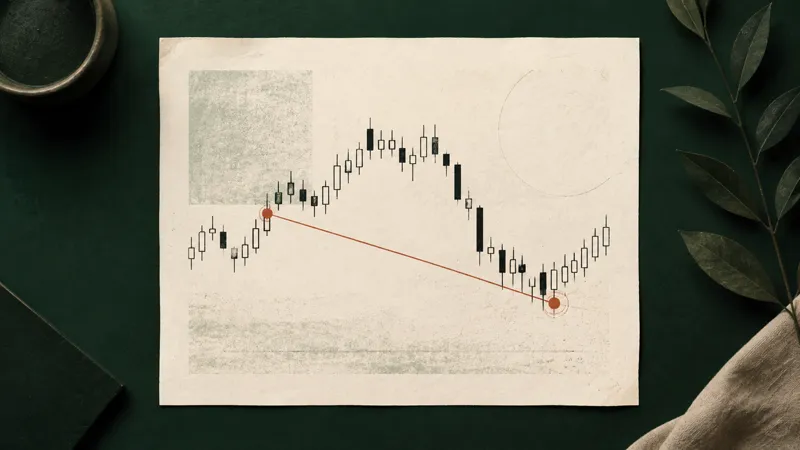
A brokerage history is not yet a journal#
Robinhood already keeps an activity history, account statements, and trade confirmations. Those records answer an important question: what was executed? A journal has to answer the next question: was the decision consistent with the rule you intended to trade?
That difference sounds small until you review a position with three entries, two partial exits, and a final stop. If every execution is collapsed into one average price, you can see the economic result but not the path you took to get there. The late add, early trim, or size increase that changed the trade disappears inside one number.
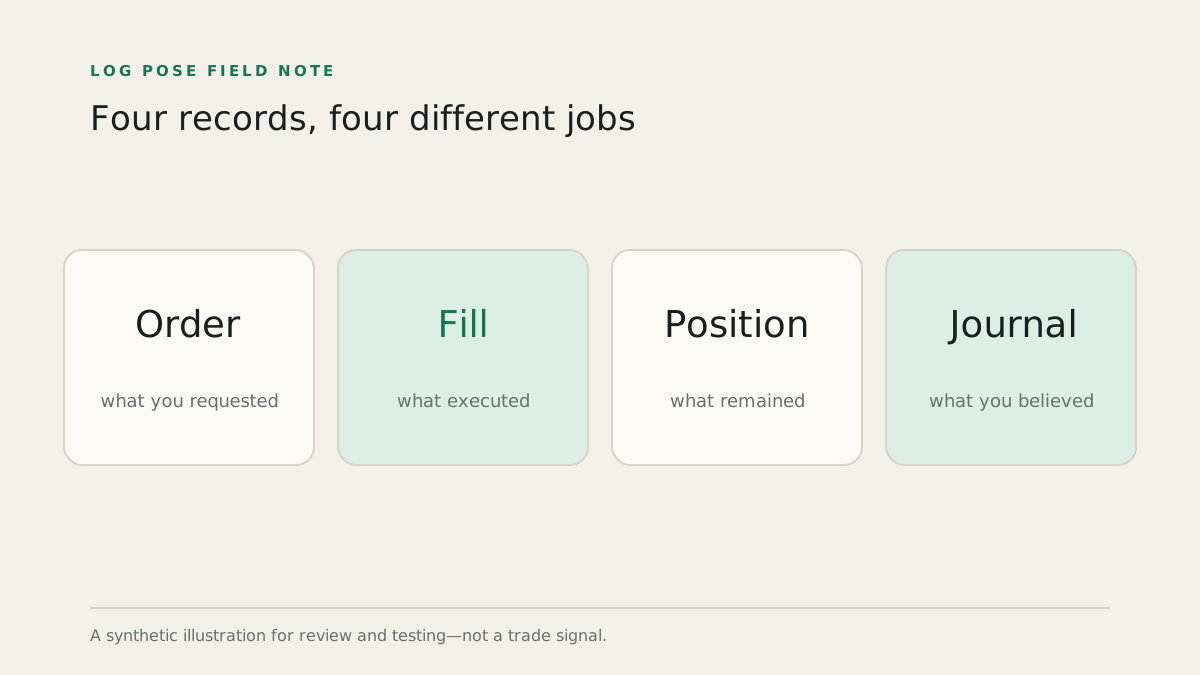
A Robinhood journal therefore needs four separate layers:
| Layer | What it should preserve | Why it matters |
|---|---|---|
| Orders | submitted side, type, quantity, limit or stop, status | Shows the instruction you gave the broker |
| Fills | executed quantity, price, and timestamp | Reconstructs what actually happened |
| Position episode | opening, additions, reductions, close | Groups executions into the trade you experienced |
| Journal | thesis, setup, initial risk, mistake, lesson | Records the decision rather than the receipt |
Robinhood's own trade confirmation remains the authoritative record. A journal is an analytical layer built around it, not a replacement for it.
Start with fills, not the final average#
Suppose you bought 50 shares at $181.40 and another 25 at $181.58. The weighted average is:
(50 × 181.40 + 25 × 181.58) ÷ 75 = 181.46
That average is useful for P&L. It is not enough for review. The chart should still show both fill markers because the second fill may have occurred after the setup was already invalidated. A single average marker can make a late decision look earlier and cleaner than it was.
The same rule applies to exits. A 25-share trim into strength and a 50-share stop later in the session should not be presented as one fictional exit candle. Keep each execution, then calculate the position-level result from the sequence.
Do not invent precision#
Broker records do not always provide the same timestamp precision. If a record has only a date, placing it at 10:17 a.m. because that candle looks plausible creates evidence that never existed. Mark the time as unknown, use a daily or session-level view, and withhold intraday setup conclusions.
This is especially important for ICT-style review. A liquidity sweep or market-structure shift can depend on the order of bars. If the execution time is uncertain, the honest result is “not enough information,” not a best-looking annotation.
Use one review sequence every time#
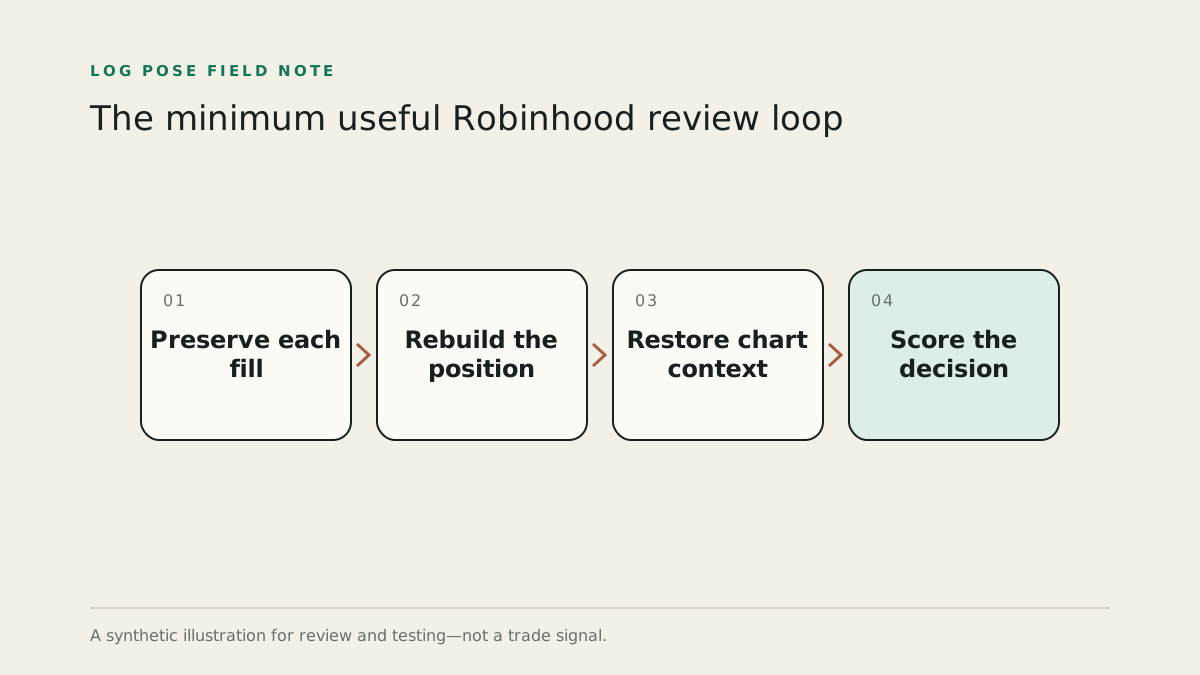
Open each completed trade and follow the same order:
- Confirm the executions. Check symbol, side, quantities, timestamps, fees, and any corrections against the broker record.
- Rebuild the episode. Group fills only while the position remains open. A return to zero closes the episode; a later position is a new trade.
- Restore the chart. Load enough bars before the first fill to define the structure and enough after the final fill to inspect management.
- Hide the outcome. Judge the entry using only information available at that timestamp.
- Score the decision. Record rule adherence, initial risk, and the one change you would repeat next time.
Only after those steps should you look at realized P&L. That order prevents a profitable outcome from certifying a weak entry and a losing outcome from erasing a sound process.
Record fields that can change a future decision#
More fields do not automatically produce better review. Keep the fields that can explain a repeatable difference:
- setup and direction;
- session and timeframe;
- entry condition written as observable events;
- invalidation level known at entry;
- initial dollar risk, entered manually rather than inferred from a fill;
- execution quality, including chasing or partial fills;
- management decision;
- screenshot or reconstructed chart;
- one lesson stated as a rule you can apply again.
Avoid tags such as “bad,” “fear,” or “A+” without a definition. “Chased 0.35 ATR beyond the planned entry” is testable. “Bad discipline” is not.
A weekly review should produce one bounded rule#
Daily notes capture detail. Weekly review should reduce it. Group trades by one stable setup definition, then compare rule-following trades with exceptions. Do not change the setup definition after seeing which trades won.
A useful weekly output is narrow:
Until the sample is larger, avoid NY PM FVG entries that do not follow a confirmed liquidity sweep.
That statement identifies a session, a setup, and a missing confirmation. It can be checked next week. “Be more patient” cannot.
Test the journal before you trust it#
Take one Robinhood trade with multiple fills and perform this audit:
- Can you account for every share from the first opening fill to the flat position?
- Does the displayed average equal the quantity-weighted fill average?
- Are the markers on the correct chart bars without guessing missing times?
- Can you state the entry rule without referring to what happened after entry?
- Would another reviewer classify the setup the same way from your definition?
If any answer is no, fix the record before adding another metric. A clean journal is not the one with the largest dashboard. It is the one that lets you reconstruct the decision without rewriting it.
Sources and methodology#
Product details and workflows can change. Links below are the primary references checked for this page; the analysis and operational definitions are Log Pose’s.
- Finding your reports and statements — Robinhood
- Account Data: Orders and Activities — SnapTrade
Log Pose is not affiliated with Robinhood, Inner Circle Trader, or the products discussed on this page. This material is for education and recordkeeping, not investment advice. Historical and hypothetical results do not predict future performance.